
San Diego Tree Care - Certified ISA Arborist
Tree Care & Certified Arborist Service
Keep Your Trees Healthy Year-Round
When it comes to maintaining the beauty, safety, and longevity of your trees, partnering with an ISA Certified Arborist is essential. Our region’s unique Mediterranean climate can pose unique challenges to the care of your trees. Dry summers, long growing seasons, annual Santa Ana winds, and the risk of wildfire make proper tree care more than just maintenance—it’s protection for your home, property, and landscape investment.
Why Choose a Certified Arborist in San Diego?
Not all tree service companies have the training or credentials to diagnose tree health problems, prevent structural failure, or recommend the right treatments. An ISA Certified Arborist brings expert knowledge in:
Tree biology and health
Proper pruning techniques
Disease and pest management
Soil and root care
Safe, professional tree removal
Working with a qualified arborist ensures your trees get the care they need to thrive in San Diego’s unique microclimates—from coastal zones like La Jolla and Pacific Beach to inland areas such as El Cajon, Poway, and Rancho Bernardo.
Our San Diego Tree Care Services
We provide full-service tree care for homeowners, HOAs, and commercial properties across San Diego County, including:
Tree Trimming & Pruning
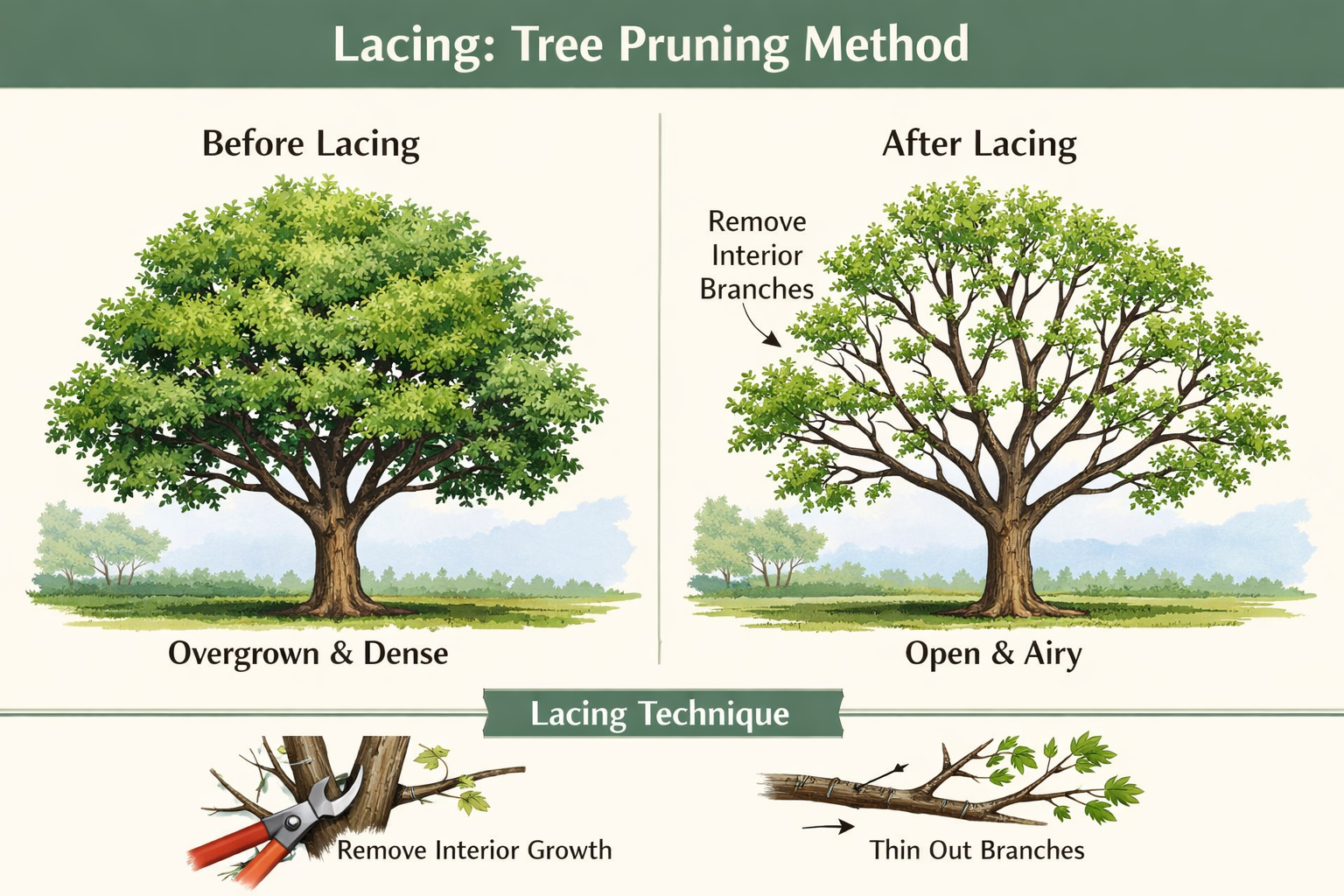
Thinning/Lacing
Is your tree looking overgrown, dense, and bushy? If so, having your tree laced will remove smaller interior branches, improve general structure, reduce weight, and increase air and light penetration into the tree canopy. This should be standard maintenance for most trees as it helps to decrease the risk of both disease and the formation structural problems, keeping it happy and healthy for years to come.
Crown Reduction
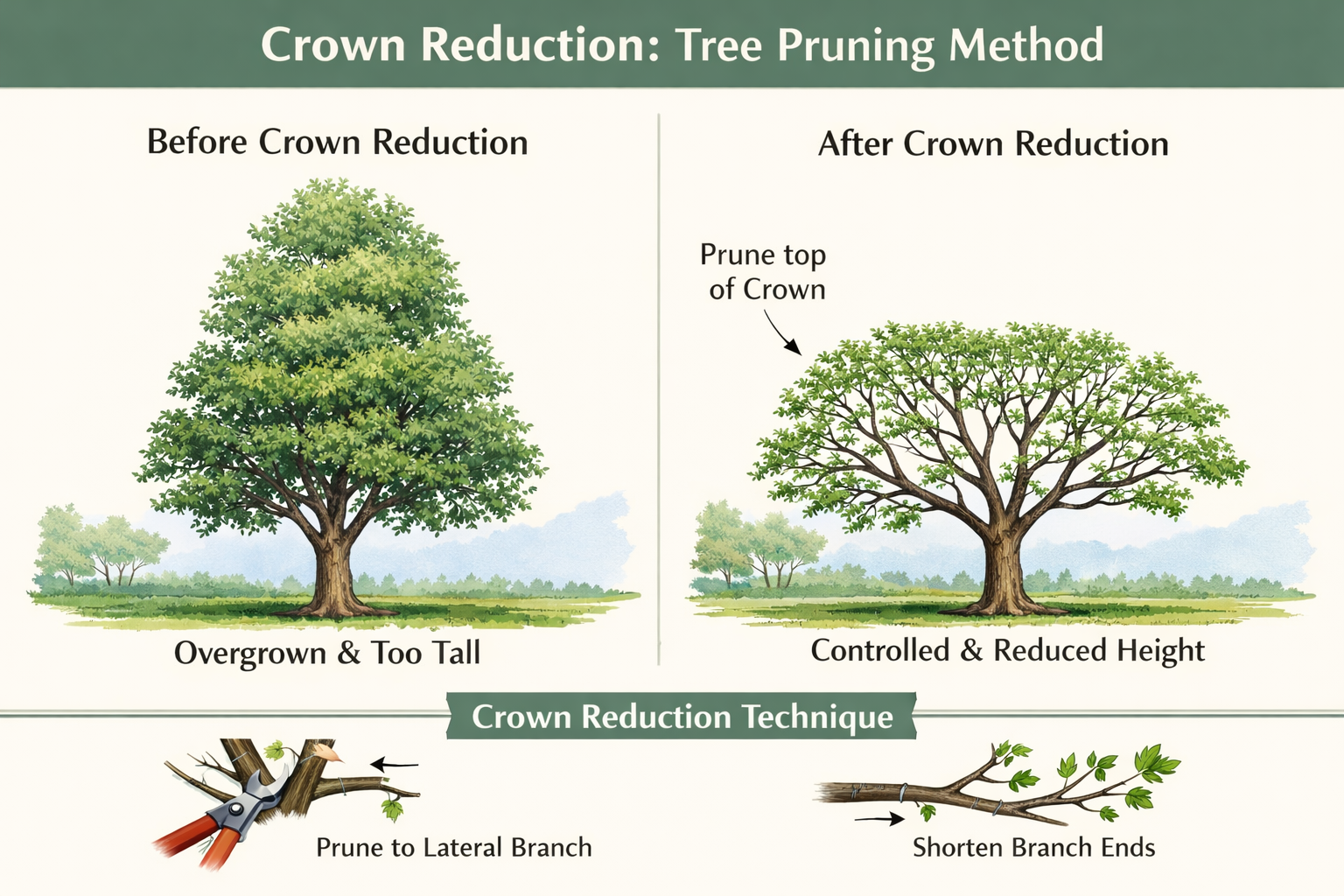
Too much tree not enough space? You may be looking for a crown reduction. By selectively pruning dominant branches back to a subordination point on smaller lateral branches we can effectively control size and shape of trees while maintaining the future integrity and structure of the tree as much as possible. A proper crown reduction takes no more than 20-25% of the total trees volume in an effort to minimize distress.
Crown Lifting
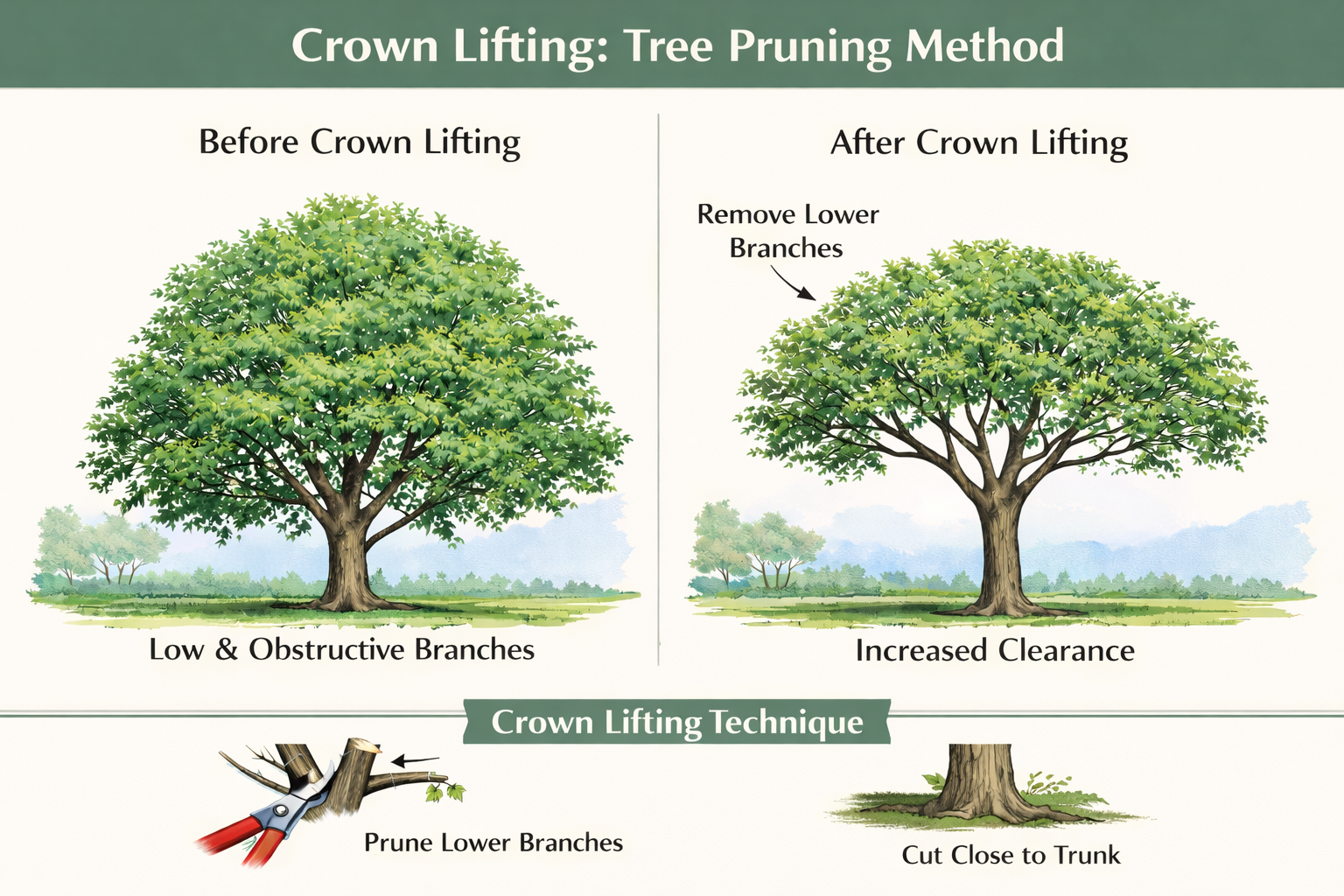
If your tree hangs to low and gets in the way then a crown lifting is right for you. Simply put, we will make proper pruning cuts back to the trunk of the tree with the intention of creating more clearance between the ground and lowest branches. Also a great preparation for fire season!
Alternate Pruning Methods
Topping: Tree topping is a severe pruning method where large branches or the main stem are cut back to stubs to rapidly reduce a tree’s size. While generally discouraged due to stress and weak regrowth, topping can be appropriate in limited situations such as emergency storm damage response, utility line clearance, hazard mitigation, or preparing a tree for removal. When used, it should be done intentionally, with an understanding of the risks and long-term impacts on tree health and structure.
Pollarding: Pollarding is a traditional pruning method where a tree is cut back to the same points on its branches on a regular cycle, typically starting when the tree is young. This creates a framework of knuckles from which new shoots repeatedly grow. Trees are pollarded to control size, manage clearance near buildings or utilities, reduce wind load, and maintain a uniform form. When maintained properly, pollarding can reduce the risk of large limb failure and extend a tree’s useful life in urban settings.
Topiary & Hedging: Topiary and hedging are pruning styles used to keep plants a specific size and shape. Topiary is more artistic, where shrubs or small trees are trimmed into clean geometric forms or decorative shapes for visual interest. Hedging is more practical, focusing on creating dense, uniform rows of plants for privacy, screening, wind reduction, or defining spaces. Both require regular trimming and the right plant species to handle repeated cuts. When maintained properly, they keep landscapes tidy, controlled, and functional without harming the plant’s long-term health.
Tree Removal & Stump Grinding
Tree Removal
Tree removal is exactly what it sounds like, the safe and controlled process of taking down trees that are dead, hazardous, damaged, or no longer suitable for their location. Our approach focuses on protecting surrounding structures, landscapes, and people while efficiently removing the tree in sections or as a whole, depending on site conditions. Safety, precision, and minimal impact are always our top priorities.
Stump Grinding
Stump grinding is the process of removing a tree stump by grinding it down below ground level using specialized equipment. This eliminates tripping hazards, prevents unwanted regrowth, and allows the area to be reused for landscaping or planting. The remaining wood chips can be left on site or removed, leaving a clean and level finish.
Emergency Tree Services
High Wind
High winds can place extreme stress on trees, increasing the risk of broken limbs, uprooting, and property damage. We assess tree stability, identify hazardous conditions, and provide proactive pruning or removal to reduce risk before storms. After high-wind events, we also offer prompt response services to safely address damaged or fallen trees and restore safety to your property.
Fire Danger
Fire danger increases when dry vegetation, dense growth, and poor tree structure allow flames to spread quickly. We help reduce wildfire risk through strategic pruning, tree removal, and fuel reduction practices that improve defensible space around homes and structures. Our work focuses on slowing fire spread, reducing ember ignition potential, and improving overall property safety in fire-prone conditions.
Structural Failure
Structural failure occurs when a tree’s limbs, trunk, or root system can no longer support its weight or withstand external forces. This can result from decay, poor structure, past damage, or environmental stress. We evaluate trees for signs of weakness and address hazards through corrective pruning or removal to reduce the risk of unexpected failure and protect people and property.
Palm Tree Care
Trimming & Seed Pod Removal
Palm trimming and seed pod removal help maintain the health, safety, and appearance of palm trees. We remove dead or hanging fronds and seed pods that can fall unexpectedly, create mess, or attract pests. Proper trimming improves clearance, reduces fire risk, and keeps palms looking clean and well maintained without over-pruning or damaging the tree.
Dehusking
Palm dehusking is the process of removing the dried, fibrous material and old leaf bases that cling to a palm’s trunk. This improves appearance, reduces fire risk, and helps prevent pests from nesting in the dense fibers. When done correctly, dehusking enhances the palm’s natural form without damaging the trunk or affecting the tree’s health.
Tree Health & Disease Management
From root problems to pests like bark beetles, we diagnose and treat tree health issues before they become irreversible.
Why San Diego Homeowners Trust Us
Local experience with Southern California tree species
Fully licensed, insured, and ISA-certified
Safety-focused crews and modern equipment
Honest recommendations — we never oversell services
Affordable and competitive pricing
Schedule Your San Diego Tree Service Today
Healthy trees start with expert care. Whether you need routine maintenance or immediate emergency service, our San Diego arborist team is here to help.